I've been working with Hubs for a couple of years now, and it's been really great for our particular needs. It's easy to setup and deploy your own virtual world on a custom domain, it's all open source so it's easy to re-skin / add features on top of, and the Hubs community discord is very active and helpful. We're using it in a couple of ways:
1) Building virtual venues for social organizations to meet and host workshops in. Youth groups etc. are having a very difficult time adapting to remote first environments, and having a space to gather and have a sense of identity has proven valuable to them. More info at [0] if you want to pop in and see it live.
2) Browser based live theatre is also something we've been exploring in our collaboration with On Board, a rotating anthology of short virtual performances by experimental creators. There's a show coming up next week if you want to check it out [1]!
We could be doing the same thing on a 3rd party platform live VR Chat or Horizons, but the open source nature of Hubs means that we a lot more agency over user privacy & security, as well as the ability to add and modify the stack as needed.
It's still early days for us, but we're building a business on top of Hubs and are getting really positive feedback from our customers.
I have been working on Hubs from the beginning (September 2017), and want to share a few observations/hypotheses behind the project.
Natural conversations require space:
- Space affords directed non-verbal communication. Unlike video calls (where gestures are broadcasted), space enables an implicit understanding of where people are directing their gestures and attention.
- Space allows participants to navigate between simultaneous streams of conversation. This is especially important for events with many people. Contrast turn-taking in video calls with simultaneous talking around a picnic table.
- Mixed media, social presence, and a shared spatial awareness combine into a utility as fundamentally useful (and important) as video, voice, or text-based communication.
The web is well-positioned to be the go-to decentralized, media-rich "spatial conversation" medium.
- This blog post [0] goes into more detail.
The "minimum viable metaverse" enables permissionless innovation and participation.
- No single organization (Mozilla included) will contribute more than a small fraction of the total utility of the so-called "metaverse".
- Mozilla's goal isn't to "directly" compete with Meta or other "metaverse" platforms.
- Mozilla's goal is to build enabling technology so that spatial conversation, online identity, avatar-based representation, etc remains open and accessible to all.
By the way, we are looking to hire a lead front-end dev [1], with more positions to follow later this year.
The feedback so far is pretty negative, but I think folks that poo poo these virtual office environments fail to channel the PG heuristic of "what is this the [ancient tech version of something that is now ubiquitous] of?" when thinking about these spaces.
As a substitute for the collaboration tools we now have, these are unquestionably terrible. But for those of you that can, I'd highly recommend checking out PokerStars VR before then diving into your opinion of virtual work environments.
If you've ever played poker with friends, you'll quickly realize that there are many parts of IRL poker that... truly suck. Play is slower than what you would like, and, if you play "correctly", the ratio of hands you are playing to time you are waiting for shuffling,dealing,etc. is quite obnoxious. There are pain points, even though overall it is super fun to play poker with friends.
Pokerstars, to my mind, did a masterful job in faithfully recreating poker in the virtual world, but then augmenting it by taking advantage of the VR tech. There's still a table, there's still a deck, the rules are the same, etc. But, because of the medium, the game goes... MUCH faster. Therefore, you get to play more hands, which is more fun. Also, yes, you might still wait around for hands, but now you get all sorts of virtual sidegames or dumb tchotchkis you can play with on your table, which is fun. Your environment can be any one of really incredible settings that help set the mood for a poker night, which is probably nicer than your mom's basement. Etc, etc, etc.
My point is, poker is a pretty mundane game from an IRL perspective, yet I fundamentally believe that had I the option to invite 5 friends over to play poker in my house versus getting the same 5 friends to meet me in the VR room, that we'd have far more fun in the VR room. This before the fact that the friction of getting together physically is now erased, so chances are we might even get to play more often. This works, however, because it isn't a perfect analogy to the real world poker; rather, because its virtual, there are enough different things that help make it better to an extent that it beats its real world counterpart (at least for me).
All of this stuff is pretty nascent and I agree that there's lots of crap there, but there will be something unquestionably brilliant about inhabiting virtual spaces with folks where you can bend some laws of physics to make mundane things (like meetings) work a little bit better than they do IRL.
> there are many parts of IRL poker that... truly suck. Play is slower than what you would like, and, if you play "correctly", the ratio of hands you are playing to time you are waiting for shuffling,dealing,etc. is quite obnoxious.
The point of poker with friends isn't to grind out hands with an optimal strategy as quickly as possible.
I played Dominion with friends online a few times during the pandemic. And I adore how much faster it is. With all the counting, dealing, shuffling, VP calculations and so on taken care of, the game plays about twice as fast. And that really does enhance the experience for me and my friend group. It improves game feel. And game feel is so important.
This is a good point. I don't agree that PokerStars VR is better than real life and won't be until the tech can replicate details like facial expressions, but the concept of eliminating unnecessary pain points is sound. It reminds me of the gradual removal of the old skeumorphic designs in iOS. However, Mozilla Hubs isn't doing any of that. I can't find a single advantage it has over any other collaboration software, frankly.
Tabltop simulator is great! The environment is intuitive enough that even my tech-illiterate family don't mind using it (one cousin actually suggested everyone bring their laptops to an in-person game night), and it works well on a traditional PC.
That's interesting, because personally I seem to dislike Tabletop Simulator; I feel super slow and constrained by it, as if I was having my hands tied, and much prefer playing the same games live with friends (or solo!) and manipulating real physical objects. Additionally, I much prefer the fact that real board games give me one more reason to unglue myself from a computer screen. I'm really curious why mine and yours reception seem so different!
Though I didn't have an opportunity to play it in VR using VR goggles - is this the aspect that is important here? Does your whole family play it with VR goggles?
I think it really depends on the game you’re playing. Some are more scripted than others and games that require moving lots of pieces are really tedious even if there’s some automation.
Scripts taking away some of the more tedious parts, and no clean up, no setup. I mean we'd all still rather be in the same room sharing food and all that, but the advantages and the large game library really do help.
I'm honestly surprised that VR hasn't been a bigger impact on board games. Besides the obvious fact that you can more easily get people together, software is great at handling the non-gameplay related "administration" that takes time away from the fun. Things that come to mind: shuffling decks, misdeals, misunderstood rule-sets (I'm looking at you D&D 3.5).
I guess the downside is also pretty big: no face-to-face communication - which itself can be a detriment to gameplay in games like Poker or PvPvE games like Dead of Winter. Also the tactile-ness of board games is such a nice escape from everything being digitized these days.
It's limited by how many people have VR rigs in the first place, and by the other things people might do instead if they've already decided they're going to play a multiplayer game on a computer or console, that aren't virtual board games.
I'd rather hop into Minecraft or whatever with some friends, if that's what I'm doing, than card or board game simulator. I'd guess that's a common sentiment.
Further, I'd rather play some very plain poker game (like the old Windows card games) with voice chat on than try to do some VR thing. Most of the benefits, and doesn't monopolize your attention. But that part may just be me.
> All of this stuff is pretty nascent and I agree that there's lots of crap there, but there will be something unquestionably brilliant about inhabiting virtual spaces with folks where you can bend some laws of physics to make mundane things (like meetings) work a little bit better than they do IRL.
I totally agree with this sentiment and I don't think you even need VR/AR etc, to achieve it. This is a big reason why I helped build spotvirtual.com. As a kid, some of my most meaningful relationships and experiences were forged through online gaming (ever played UO?). A big part of this wasn’t necessarily the gameplay, but just the shared experience of being part of a virtual space that had its own rules.
There is definitely room to apply this same experience to a work setting, where mundane things can be transformed into something more meaningful and effective.
Metaverse is okay but considering people are depressed and isolated being on social media today I don’t see how adding even more layers between reality is going to help.
I wish technology would make IRL better, instead of delegating all problems online.
1) I worked on this kind of stuff in the late 90s early 2000s, aside graphics fidelity and finally getting decent vr headsets and trackers this looks about the same in terms of features.
2) I lived through the transition to desktop os windowed environments, there was a lot of talk at the time about how we'd never use a commandline again, but things have boomeranged for many, many people still use the cli. I don't see this replacing video chat or even text chat.
3) I talked with a small company locally right after the htc vive came out, they were building tech like this (virtual meeting spaces) and I went to check it out, it was actually also the first time I had used the valve vr technology. The man interviewing me was in another room also on a vive rig. It is quite cool how eye contact works in a vr space. But at the end of the interview I left knowing that even if I got an offer I wouldn't take it but that also this technology was not going to break out in any meaningful way for a very long time. I'd been through this before and other simpler technologies just worked better.
Just chiming in to add some positivity. I love the idea, having a tangible space to play around in can make conversations with friends much more fun and dynamic than a boring old Discord voice channel. I understand where the hate is coming from given how tied stuff like this has become to the "Metaverse" but this seems like a harmless little experiment. Sad to see everyone trashing it
I've seen this be used for providing a space to explore 3D scans of an abandoned mining town in California: https://poly.cam/cerro-gordo. I think there's definitely some cool applications along those lines of providing a way to interact with real physical locations virtually with other people at the same time.
Honestly I'd give it a give it try because of the mozilla name ...
This reminds me of the old internet when folks tried all sorts of weird stuff, maybe failed, but they were neat attempts. I still remember Microsoft Comic Chat.
I'm really bummed out by all the negativity here on HN. Folks talk about simple web and seem to ... maybe like the idea of developers being adventurous (or maybe just founders...) but then on HN we see a volume of complaints if there isn't a clear use case / something isn't polished to high heaven.
I do feel like current conferencing apps like meet and zoom are probably not the endgame for digital communication and adding a 3D spacial element can make a lot of interactions intuitive, even if it feels silly at first. like spontaneously breaking out a conversation into small groups if there is proximity based audio chat. You don't have to buy into the "metaverse" to see the utility in a fun little tool like this.
I got the same "old, weird internet" vibe that you did. Back in the 90's there seemed to be more moonshot ideas like VRML and The Palace Chat - things that were maybe a little silly and geeky but at least pointed the way to something that could eventually become more useful and developed.
FWIW, I know of a group of language learners who have setup one of these rooms with the rule that conversations only take place in the foreign language. So far, it has been very effective in giving learners a place to practice and hone their language skills.
I remember walking away from the 2009 film 'Surrogates' (starring Bruce Willis) and being _incredibly_ disturbed at the idea that he/his wife hadn't actually seen/heard/felt/etc. each other (or anyone) in years. I'm not against VR as a respite, but this and Facebook's “metaverse” push makes me want to spend LESS time with my devices, not more.
It makes sense as a virtual space for remote classrooms etc when everyone's going nuts over relying on Zoom, but it seems like this is just a vague "metaverse" thing with no particular problem in mind. Instead of wanting to be excited, it looks like something that's going to get axed as a lot of Mozilla's experiments.
    Facebook: Meetings are fun, let's do them in VR!

    Mozilla: Meetings suck, let's try to make us tear our hair out less over it with virtual spaces.
The last Twitch VOD is from two years ago, and YouTube one year ago, so it's basically dead. There's cool stuff to be done in virtual spaces, but if people don't know what they're trying to address, you get the next Google Glass.
Hey Amar, thank you for making this video, it mirrors my experience over the last year and I've been searching for way to express and explain this universe to others. You've done a wonderful job
I like VR, but haven’t gotten into these chat like spaces yet. I feel like the setup is just way too cumbersome still. But this video is very convincing.
It makes me wonder how it would feel to walk around a virtual museum like this in VR and experience it with friends. However because the avatars are so loud it would likely detract from the experience.
My initial reaction is "wow this is incredibly stupid," but my second take is, wouldn't it be nice to be able to walk around with someone on a video call? I think a 3D space like this will always suffer as when compared to a video game, and it might also suffer when compared to productivity software, ie, Zoom, but I think as a new avenue this could have some kind of utility. Certainly, compared to World of Warcraft this is very boring, and compared to a Google Meet you're probably not going to be as productive on a work call, but maybe there's something to a format that's not just an uninterrupted view of someone's face for an hour while you catch up.
The meta here however, which is Mozilla focusing on yet another random product, is alarming, and I think a lot of people in the comments are responding to that, probably fairly.
    but my second take is, wouldn't it be nice to be able
    to walk around with someone on a video call?
Why?
I've played plenty of FPS games online in my life, and I "get" the power of doing things in a shared 3D world together. Also talked to a lot of people online, over IM style messengers and IRC/Slack/etc.
I just don't think the idea of strolling around a virtual world enhances the idea of messaging, at all.
It's needless skeuomorphism; the naive and terrible kind I thought maybe we'd finally ditched in the past. In what way does this enhance the concept of communication?
Messaging, no, voice chat, maybe. I haven't actually tried it so I'm just theorizing here, but to me personally, I could see being in a simulated physical space with someone as enhancing the experience of a long call.
I also want to make the distinction between spending time with friends in a game vs spending time with friends in a voice call. I don't think a game and this kind of utility are a good comparison because, while they're both in virtual spaces, they have very different goals. If you look at this as a game with all the gameplay taken out, yes, it's undeniably lame. If you look at this as, say, a Skype call where I can take a stroll with someone, then I do think there's a value add here.
I've had to use a tool very similar to this (but maybe broader in scope and more capable) in a business context. I can absolutely confirm that the entire thing is a solution in search of a problem. Meetings, presentations, collaboration, everything, was much worse in one of these than common, existing alternatives. It adds cruft for zero benefit.
The real utility comes in when you can pin random media like images and videos to virtual objects. It's much more intuitive to work with stuff when you have everything laid out physically. It's literally a digital mind palace
I love this product, and I don't get the negativity here. For NFTs it is perfect as a gallery that you can join with people to present your work. You can meet up. There is an editor where you can model spaces. Do I miss something? Is there something else with multiple user capacity and ease of development? https://hubs.mozilla.com/spoke
Unpopular opinion: Mozilla has some unique advantage to win the 3D Web.
1/ Hubs and spoke (https://hubs.mozilla.com/spoke) are trying to solve the problem of how to composite and deliver 3D assets over web protocol.
1.1/ Unlike jpegs that can be passively embedded into web pages, 3D assets requires active interactions with other objects.
1.2/ Traditionally, we need a 3D game engine to pack all the assets into one big binary, then build and ship the binary over cartridge, DVD, or recently Steam.
1.3/ Spoke + Hubs is the new web-based 3D engine, which can potentially revolutionize how we create and access 3D content.
2/ Being a popular, open source, and independent browser company gives Mozilla the position of leading the effort to standardize the convention of the 3D Web.
3/ This is low level tech and worth investing in. Also Mozilla makes decent money (> $500M each year) and this is something they can comfortably afford.
4/ Virtual meeting space is just one use case. Admittedly Hubs' implementation is less than super well polished, but I don't know whether they want to be the 3D Zoom in the long run. But I will say it's pretty neat if we treat it like a tech demo for their Web-based 3D engine.
Considering Mozilla had to lay off a significant amount of the company, including almost all of the developers on the rust teams, not too long ago I’m not so sure how comfortably they can afford it.
Once they start charging for [MDN Plus](https://www.ghacks.net/2022/02/21/mdn-plus-mozilla-plans-to-...) they'll not only be able to afford it, but also give their board well deserved raises. After all, user surveys keep indicating that what Mozilla users want more than anything else is to pay for User generated MDN content.
>After all, user surveys keep indicating that what Mozilla users want more than anything else is to pay for User generated MDN content.
This isn't what's planned. They will not be charging for user-generated content including all content currently available on MDN. They will be charging for additional in-depth articles as well as some "premium" features when it comes to personalization and easier off-line use[0].
[0] and of course nobody will prevent you from rolling our own such features or even a competing MDN-like site, as the content is available under CC-BY-SA-2.5 on github.
They aren't really independent because a huge chunk of their money comes from Google. Their open source, not counting Rust because they divested that, is also mostly under their own copyleft license which discourages outside collaboration.
Wow, I haven't encountered such an obvious technological fad since 3D TV was a thing, and I'm quite sure the "3D web" such as it is will meet the same fate. It has all the same markers too:
- a stalling industry desperately looking for a new revenue stream: check
- heavily locked down content tied to expensive hardware: check
- aggressively pushing an unwanted product that doesn't do anything anyone really needs: check
I don't get the idea about this "metaverse" kind of thing. So it's not a game so there is no gameplay. You just run around in a 3d world which is boring as hell and post pictures on the walls or post some kind of lame animated emote both of which you can do in any messaging app without having the issue that it could not be seen.
Some things are imo not suitable as a 3D experience, at least unless it is much, much better than you get with a normal conference call or stream. This is certainly proof of that.
I love how this probably sounds like something super cool to executives with little to no technical experience or older office people who aren't into gaming but seriously if I worked for a company that would require me to join such a pointless thing I would most certainly resign from my position on the same day.
Stop trying to gamify work, it's work and not a video game. On top of that, it's ridiculously close to look like a kindergarten and I have no understanding why some companies want to treat grown adults as small children.
This idea is so bad that it must have come from some woke people that hear the metaverse and go all in on the hype not thinking of if that's actually something people want to do. People who are completely disconnected from the actual society and live in some tech bubble. I'd rather live in a shed in the forest than to run around in a 3D open office space.
I am sorry to be so negative, but even if the actual demo could be something cool that could be used for games in the browser this idea deserves criticism.
Conference calls can be boring as hell too. I don't get why people stare directly into the camera, mug-shot style for the whole meeting. I place my camera on my second monitor off to the side, and glance over when I'm talking or need to make eye contact.
In normal office meetings, people sit around a table, you turn your head or glance around table to speak with people. But in a boring as hell Teams catch-up, everyone is mug-shot fronting each other. When the family cat wanders into the scene, everyone laughs and enjoys it because suddenly the monotone format gained some 3d life.
I'm not surprised virtual spaces are being explored. Hubs is at least browser based, and the scene editor too. Open source, self-hostable, easy to use. it ticks a lot of boxes. I was pleased it all worked well in slightly outdated Firefox 88 with adblocker and enhanced tracking on without issue.
Sharing images... well, perhaps an artist wants to share their intention for a real exhibition of photos. A virtual space allows the collection to be viewed in a similar manner to the intended real gallery space. Artists ideally like to exhibit bodies of work rather than drip-feeding single images spaced one click apart, each one covered in "share this" junk icons and prompts.
Sure a conference call can also be boring as hell. If a conference call is boring it probably is because what you are talking about or because of the people in the call, not because you see their faces. You don't actually need video since the audio is the important part. When I game with my friends, I don't usually use the camera and many times on a conference calls I don't have the camera on either.
A 3D space would make the conference calls more ineffective in practice since the focus shifts from the actual things you're discussing to something else. You'll also have to force people to join the 3D world and run around to receive the audio. Most certainly, if used in a corporate setting, a lot of the participants will have little to no interest in that 3D world. I picture a large company implementing this and there will be a few people excited while most will hate it. They will be forced to fake interest in order to receive a pay check.
I think gamifying work is a bad idea and forcing employees to be in a kindergarten kind of experience is very offensive because in reality this is probably the most likely scenario how 3D meeting spaces will be used in practice.
If you want me to game while at work, at least let me pick an actual game and we can talk work at the same time. I am not attacking the tech behind it since it is probably good and strong but the idea of 3D working spaces in a kindergarten experience is a horrible idea in my opinion.
For the gallery example, sure maybe it would work in a VR experience which is a lot more immersive but it also adds a lot of clutter from what you're trying to display. I get that there could be a place for it when visiting an IRL gallery is not a viable option.
It is all just my personal opinions of course, I recognize that other people may like the idea of living their lives online in a 3D world but personally I prefer the real world. I guess I am just afraid how 3D spaces will be used since I fear it will be forced upon people around the world just like most corporate things like soulless open offices, "voluntary" corporate cringe activities and so on.
At the same time you also have to recognize that they probably spent a lot of man hours and money on this rather than actually improving their browser which is lagging behind most others. To me Mozilla seems focused on everything except making their core product something I want to use and support and I am not alone you just need to look at the usage numbers which are so low Firefox is rapidly becoming irrelevant which is incredibly sad.
It's like an MMO with bad graphics embedded into a web browser, except there's no fun and you're not allowed to leave and the gameplay is Microsoft Office:
If not just Firefox, other related products. They seem to have the same issue as Google with starting and dropping strange products. I was actually considering using their password manager on iOS when they announced it would be discontinued.
Lockwise has been absorbed into Firefox now. So if you don't mind installing Firefox on iOS, you can install Firefox to get the password manager, which integrates with iOS's password autofill, even to a better extent than the old Lockwise app. The old Lockwise app tended to not respond from iOS' autofill "trigger". Firefox doesn't have this problem.
This is a bit of a "well-actually." Yes, all the functionality of Lockwise is still there, but the situation is complicated enough that not everyone is going to get it. For every person you correct on HN regarding this, there are hundreds of other people who don't visit HN, never bringing it up in a context where someone can teach them how to use Firefox as a password manager on iOS.
It's great if you know about it. But it still shake's people's confidence about the future of any new product announcements from Mozilla.
That's also true and I agree. It's confusing. It also took me a while to realize that Firefox for iOS has gained the built-in password manager and that I could replace Lockwise (which, due to it often not responding to the iOS password autofill trigger, was really annoying).
I would have prefered if Mozilla simply fixed Lockwise.
Mozilla's "Fluent" internationalization software is some of the best out there. It is a real shame that they are not doing more with it and integrating it with other tools in this space.
"Just focus on Firefox" will lead to stagnation and eventual death.
The essential problem here is that a web browser is nothing without content, and much of the most popular content on the web is found through Google, a company who grows closer every day to locking down a vertical monopoly. Firefox would have to be ten times as good as Chrome to even be on equal footing, and while it does have some marginal advantages, nothing is enough of a deal breaker that I would stop visiting YouTube just to avoid using Chrome [1]. Firefox really was that much better than IE6, but Firefox isn't competing with abandonware this time around.
Mozilla needs to stimulate the creation and viewing of content outside of Google-owned walled gardens. Pocket Recommendations were an obvious attempt at this; just make sure all the recommended articles actually open correctly in Firefox. This was probably also the biggest reason why they bent over so far backwards to accommodate NetFlix, who would have been happy to make sure Firefox worked correctly just to avoid being vertically integrated to death by Chrome and Google Play Movies/TV.
The relationship between Steam and Linux comes to mind. Funny how Linux became a viable gaming platform right after Microsoft announced the Windows Store.
[1]: This will, of course, change once uBlock Origin stops working.
> The essential problem here is that a web browser is nothing without content
While this makes business sense, what kind of world are we creating where nothing is worth investing in if we can't monetize the fuck out of it? Where KPI and user engagement is king?
Thanks, I hate that. Mozilla is dying because they've forgotten their core product. We're here for the browser, not the content that makes us the product.
> what kind of world are we creating where nothing is worth investing in if we can't monetize the fuck out of it?
Where did that come from?!
I never said anything about monetization. I said "content," and there's plenty of non-commercial and indie content that is only tested in Chrome. You can probably root-cause analyze it to monetization (indie website creators only test in Chrome because they only use Chrome, and they only use Chrome because they also happen to frequent YouTube which works best in Chrome, or maybe because their PC came with Chrome by default), but blaming Mozilla for the fact that most people don't exclusively use non-commercial websites seems a bit silly.
> We're here for the browser, not the content that makes us the product.
I really don't understand what you mean here. What do you even do with Firefox, if not open web pages in it?
I doubt that furries are that interested in stuff that looks worse than years old Second life content ( https://www.youtube.com/watch?v=QYWBjOk6Wsk ). Nevermind what they can have today in Neos VR.
- "We have invented godlike powers over space, time and perception, and we have earned our escape from the confines of corporate convention. It should be a turning point in society and economics, a jewelled pivot in human experience. And what does Facebook do with this defining moment of new potential? It reinvents the office meeting, the absolute epitome of everything we have paid with blood to leave."
HN commenters may be surprised to learn Hubs has been around for ~5 years and was built in part to front-run the push for centralized metaverse projects, which may soon mediate much interpersonal interaction. It also can be deployed to AWS and generates revenue for Mozilla.
Here’s a talk I gave years ago laying out the reasons this is important work. Hopefully it can help reduce some of the reactive negativity - you may be convinced to stop thinking these changes aren’t coming, and instead focus on making the best version of the future you can where they do.
That “Magic Link”/passwordless auth flow was pretty slick in that the verification link does not authenticate the browser that it opens from your email, but rather the browser that your email address was originally entered in gets refreshed and logged-in when the link is clicked.
Is there a trusted Open Source package that does this?
Hubs itself is open-source; you should be able to find whatever library it's using if you dig in the relevant repos.
> the verification link does not authenticate the browser that it opens from your email, but rather the browser that your email address was originally entered in
That is much slicker (and necessary in the case of Hubs, where you may not be able to access your email from within a VR environment), but it also carries risk: Naïve implementations would open you up to attack if you accidentally clicked the link on an email sent in response to someone else entering your email address in the app.
Tried "Create Room" to see what was up. Denied microphone permission because I just wanted to look around and it doesn't need it for that—there won't even be anyone else in the room, right? Even if there were, I wouldn't say anything. Tells me I can't get in without enabling microphone.
:-/
What's with the push to these virtual working spaces? I've had some exposure to earlier ones (which look basically identical to this new wave, looking over the very limited info on this landing page) and they're the worst. Awkward, and eat tons of system resources for no benefit over a text or video chat.
Strange to see all this negativity here. Media artists have organized some pretty cool VR events during Covid lockdown times :-) I think it has lots of potential.
Looks like VR is going through the skeuomorphism phase that mobile did when smartphones came out. The knee-jerk reaction is always "let's take things we know in real life, and represent it in this new medium!" Hopefully over time we'll learn what we can and can't do without, and create better VR interfaces.
Honestly, I don't know right now. I just got my VR headset recently and I've been trying to find as many different interfaces as possible. Very excited by WebXR since it makes it 100x easier to iterate and experiment with different techniques, but most apps I've seen out there today are either skeuomorphic or attempting to bring screens into VR. Screens in VR can be jarring since it is difficult to gauge distance, and when pop-ups appear in front of your face it's very disorienting. It feels like we need design philosophies like material design, but for VR.
Plockle [1] shows a bit of promise; it's a block-puzzler that lets you orient blocks in space. Since it's a physics-less system, it works especially well in VR.
Seems a little less cringe than Horizon Worlds. Yet I am skeptical of the "alternate space" application of VR, I am much more excited to see VR applications that tell a story the way theme park rides do.
A lot of this stuff tends to be too game-like, you'd be surprised by how many people are unfamiliar with WASD controls combined with mouse movements to change the camera angle. There's a lot of coordination there that long-time gamers take for granted.
I find these conventions incredibly limiting when showing this type of environment to someone that doesn't play video games. It almost gets dismissed immediately.
I also wonder if a 3D environment over-complicates this type of experiment. This is essentially audio with an avatar, why not start with a 2D or isometric environment to reduce the complexity?
Something about calls is far too formal and intrusive. I really need to be able to approach someone in a way that’s much more granular than HELLO I AM CALLING YOU NOW and I hope tools like this will help.
This might sound a bit weird but I also feel like sharing my display. Making it openly available for anyone else
to connect to and see. Like a kind of work Twitch, I guess.
(Maybe one particular workspace mind you. One that has my non-private stuff on it — terminal and internal tools websites that I’m using — and not my company email or IM.)
This 3D space trend is so weird. Nobody wants this. Kids fresh out of college think it’s super cringe, and anyone older won’t bother wasting their time.
Regardless of the discussion of what the actual point is, can VR designers finally understand that graphics CANNOT be this bad. It means instant dismissal.
In their free time, people watch Pixar movies and play near-photo realistic games. And have been for 1-2 decades. You seriously cannot get away with this absolute garbage. It's late 1980s VR quality. It's below second life, which is ancient.
Up the bar. Create a world where people actually want to be or this will never work.
Not too busy, not slow to render on low-end hardware, not blocky, and importantly not trying too hard to be photo-realistic. Enough spatial cues to see this as a 3D environment, though.
A world where I'd like to be is not necessarily photo-realistic at all. Some conscious suspension of disbelief is actually helpful.
I wonder if one could build a compelling 2D pixel-art collaboration place. The startup barriers would be so much lower, you could try and fail with lots of ideas.
My company tried doing a VR standup in here last year. It was impressive that it worked at all - some people were on desktop, some on mobile, some in headsets. But while it was kind of a fun bonding event to see everyone walking around and chatting, it also took 3x as long as a zoom standup since people kept losing audio, dropping out, etc. We went back to zoom the next day.
At a certain point you might not have enough third party devs to really exercise an API or drive adoption and developing a first party app is a good way to get the party started.
Assuming all the action takes place in a confined room it is not a particularly difficult problem to solve compared to an OASIS or Sword Art Online-like virtual environment which would have the problems of an open world game to solve.
Seeing the similarity between this and their previous efforts like WebThings, in terms of providing more open alternatives to upcoming proprietary trends. It's unfortunate they lack follow through and commitment.
As an aside, I think these are great. As a photographer, I'd _love_ to use something like this to show my photos "in a space" virtually with my photos on the wall, etc. I tried to do that in Hubs but I found the UI a bit infuriating. Couldn't figure it out. But I'm hopeful because Mozilla team is great.
Don't like the snap rotation. Forward and back are smooth, but rotate left or right is a 45 degree snap. If you want finite rotation angles at least sweep smoothly between them, this is really jarring.
Oddly I use the snap rotation when playing Echo VR because in VR I found the uncontrolled smooth rotation more annoying. YMMV.
Besides, you could make your own scene and increase texture detail and not worry about optimization. Add more detail around the hard edges, add furniture etc. That leaves indirect lighting, soft shadows, particle effects as the potential improvements. But those things I'm guessing would kill performance.
Well I have defended Mozillas decisions in the past and still thought they where the good guys, then they came out with this trash. Waste of money. If they can eventually monetize it then great, but personally, I don't think it will generate any revenue and just be a money-sink.
Guess it might be time to switch browser soon ): Google have won.
Oh didn't see that. Page was refusing to load at first.
Well this restores a bit of confidence if they actually manage to get customers. Though, I still think they won't make their initial investment back and then they will kill the product. Hopefully I am wrong.
Mozilla is the new Netscape. Their only focus should be to build the best browser in the world (like firefox at the origin, fast, simple, small, multiplatform). They have wasted so much money with ridiculous projects. Even sadder, they have weaken the only promising one : rust.
Virtual spaces in the browser, easy to make, share, invite participants... all without anyone needing to pay anything or login anywhere. That's worth supporting.
Imagine if Google or the other tech silos did this. You'd need a phone-verified account for sure before permission to send even one single emoji is granted.
Each to their own, but I'm planning on making a work-themed scene and inviting our small team. The fun part will be arranging the scene with familiar products we sell (industrial machines) placed around the virtual workshop, and a few posters on wall etc.
Runs with OK framerates in a browser on an old imac from 2014. Some obvious UX issues with very fiddly controls. Teleport barely works for example. Nice as a proof of concept; probably useless for anything else.
I was listening to Lex Friedman's interview with Mark Zuckerberg a few days ago. Like most people I have my reservations about Facebook and their strategy with Meta but it was insightful nonetheless. For me a few key takeaway was that a VR environment might be useful because zoom/meets/etc. calls actually kind of suck.
Zoom calls have a lot of issues and limitation. Only 1 person can speak at the time. You kind of have a lot of people looking in random directions so there isn't really any eye contact and it's actually hard to interact with people non verbally. Can they see you? If so, are they even looking at you?. Also, it doesn't really scale to large groups of people; for that it basically reduces to a live video feed that has zero interaction (most online conferences are like that). And when people share their screen to show a presentation or whatever, they kind of necessarily are looking at whatever they are presenting rather than the video of other people.
What Zuckerberg talked about were actually kind of neat features.
- you can have side conversations elsewhere in the space and "vote with your feet"
- your avatar is primitive but has enough interactivity that it could show your hands, which might be good enough to give you some notion of physical presence that you simply don't have with a zoom call.
- there's a notion of standing around something and talking about that thing. That might be an image, an object, a video, or whatever but it's different from sharing your screen and then promptly not being able to see the audience anymore. You can point at things, draw attention, etc.
- spatial audio helps people figure out where sound comes from and who is trying to say something.
- you have a notion of looking at someone or something and standing close to them.
So, I can see how that would be an improvement over a zoom call. Yet I don't think vr meetings are a very compelling use case though that will get a lot of people excited. Fundamentally, it's overkill for having a meeting and you always have people with bad connections, or joining on a phone or simply doing other stuff while they listen in. I guess it would be nice to have the option. But it would have to be opt-in and multi modal. Additionally, many meetings are quite serious and have topics that just aren't even meant to be fun, and involve people that are quite stressed or even angry. Having them appear as some silly avatar in some silly environment is probably not going to help improve these people's mood. Imagine having a performance review with your boss parading around as Donald Duck not giving you a raise. Probably would be a bit tone deaf. Great material for Ricky Gervais to do something with though.
I think the main issue is that VR/AR are cool and all and as soon as we call it a game it becomes actually compelling because then there is something to actually do and be busy with that people actually choose to do. However, having meetings and looking at somebody droning on about some spreadsheet or presentation while hopping around as a duck avatar in some hellscape virtual office type environment that you can't escape from is probably not that compelling/engaging/exciting. Nice the first time, but gets old pretty quickly. Video off, mute on is a popular setting with a lot of zoom calls for a good reason. Kind of frees you up to do more interesting things. Some would consider that an upgrade over sitting for hours in some stuffy meeting room having to listen people talk about all sorts of really boring shit. Haven't done that in years and I don't miss it.
Hey, most of the hamburger menu is visible when you tap it now, and the part that isn't will scroll in. (I have the url bar at the bottom, so it's a little bit harder, I guess) So that's progress.
For a few weeks now I'm getting the error where if I exit and resume Firefox Mobile too quickly the active tab will be blank grey, and if I try to change tabs the second tab will display the page from the first tab but I can't interact with it. Any subsequent tab I switch to gets replaced with the first tab. It's infuriating.
Management and sales completed their takeover of Mozilla over the last 5 years. The Mozilla we knew for decades is dead and gone, and now there's a zombie consumer tech company left in its place.
They were taking in a half billion a year and decided to be a haven for at-best, moderately related technology development efforts. They were losing money.
So, after enough bleeding, they stopped doing that and are now experimenting (this is an experiment, just like MDN plus and others) with other things to do. They look like they're still trying to evolve the web.
> So they've gone from technology experiments to... uh, technology experiments?
I think there is a distinction between technology experiments (which produce prototypes and proofs of concept) and product experiments (which produce MVPs).
They're aiming for a bit of revenue and trying to aim more precisely at the web. In lieu of Rust, which is a wonderful language, but neither web nor revenue-producing.
I wish they'd abandon the technology experiments in favor of browser experiments. I don't want Firefox to reinvent the web, I want it to be as pleasant and useful as it was ten years ago.
What's really weird is they also fired all of their browser developers working on VR support. So Hubs basically works best in browsers that aren't Firefox.
It's been a while since I used Hubs. Are they still artificially blocking Chromium on desktop for starting a WebXR session? I know they allow it in Chromium for the Oculus Quest, because Firefox Reality is basically unusable. Pico Neo, HTC Vive Focus, and really any standalone VR device that isn't the Oculus Quest, there are no browsers available other than Firefox. So that means the only WebXR experience you have available to you is a broken one.
Main annoyance I have with it is that the extensions are still whitelisted and limited. Not a huge issue for me either and I still use it over all other mobile browsers but it's the most common issue I run into with it.
That's why it's an annoyance and not a blocker for me. Most things that I want are already white listed but there's a few random ones that aren't but aren't huge deals since I don't generally do those things with them on mobile anyway.
I guess this is a "metaverse" play - I like the idea of it but having tried something similar a while ago (albeit with 2D spaces) it seemed kinda pointless. I don't think the vicinity aspects really added anything in a work environment - if anything it took away from modern communication (i.e. you can't just ping someone to chat to them there and then, you had to go and "find" them in the virtual space before you could talk, unlike e.g. slack or whatever)
The only time I've seen it even get close to working was for "work socials" where it was natural to wander around and mix with people or play games together in the space - i.e. where you are not actively trying to get something done.


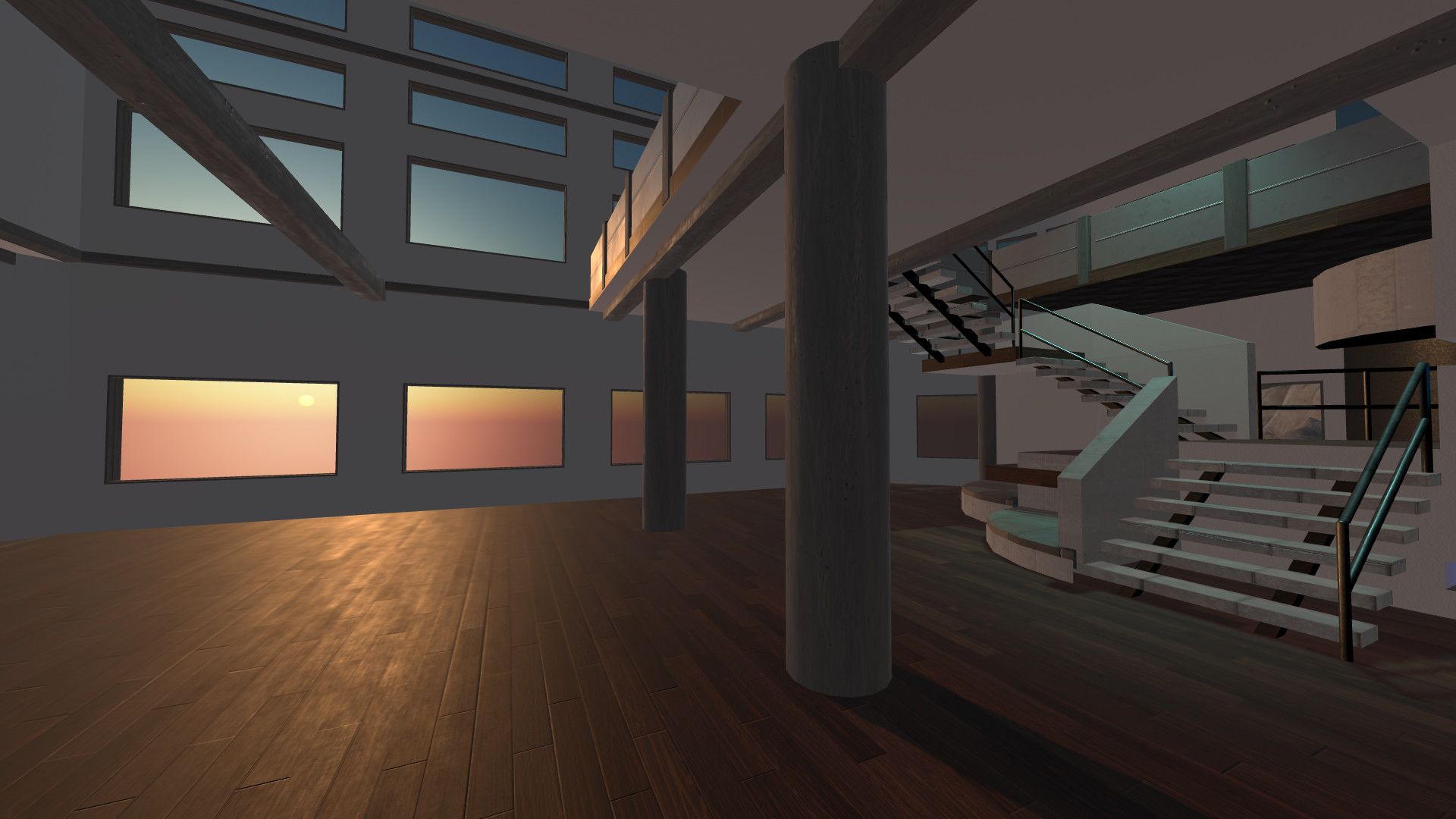
1) Building virtual venues for social organizations to meet and host workshops in. Youth groups etc. are having a very difficult time adapting to remote first environments, and having a space to gather and have a sense of identity has proven valuable to them. More info at [0] if you want to pop in and see it live.
2) Browser based live theatre is also something we've been exploring in our collaboration with On Board, a rotating anthology of short virtual performances by experimental creators. There's a show coming up next week if you want to check it out [1]!
We could be doing the same thing on a 3rd party platform live VR Chat or Horizons, but the open source nature of Hubs means that we a lot more agency over user privacy & security, as well as the ability to add and modify the stack as needed.
It's still early days for us, but we're building a business on top of Hubs and are getting really positive feedback from our customers.
[0]https://activereplica.io/
[1]https://www.eventbrite.com/e/onboardxr-4-port-of-registry-ti...